A Safe Future for Dairy Products: Hygienic Design and Aseptic Packaging Technologies
For the dairy industry, 2026 marks a period in which food safety standards are being redefined under the principle of “zero tolerance.” Consumer demand for additive-free and natural products is driving manufacturers to extend shelf life through packaging technologies rather than using preservatives. In this context, high-tech filling machines act as a shield, eliminating microbiological risks while preserving the natural qualities of milk.
The Fundamentals of Hygienic Design
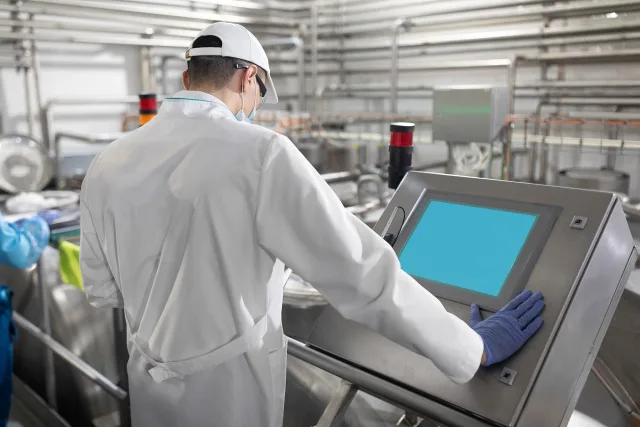
The design of a modern dairy product filling machine is based not only on functionality but also on cleanability. Ropak Automation’s next-generation machines, such as the RPK-L-PM40, stand out with their AISI 304-grade stainless steel frames and engineering designs that eliminate “blind spots.”
HEPA Filter Systems: These systems ensure that 99.97% of particles are removed from the air inside the filling chamber, completely eliminating the risk of airborne contamination during packaging.
Ultraviolet (UV) Sterilization: Sterilizing packaging materials (cups, lids, foil) with UV light prior to filling minimizes microbial load without the use of chemicals.
CIP (Cleaning-In-Place) Compatibility: The ability to automatically clean and sterilize machines (SIP) using closed-loop systems without manual intervention ensures continuous hygiene and reduces labor costs.
Technological Interventions That Extend Shelf Life
The shelf life of dairy products depends not only on temperature control but also on the management of the packaging atmosphere. Modified Atmosphere Packaging (MAP) and aseptic filling techniques preserve the freshness of milk, yogurt, and cheese by slowing down oxidation. The servo-controlled filling heads in Ropak machines prevent spoilage caused by leaks by verifying the seal integrity of each package with 100% accuracy.
Packaging lines integrated with smart sensor technologies—particularly those emerging by 2026—can track the freshness status of products throughout the logistics process. This enables manufacturers not only to sell products but also to offer “guaranteed freshness,” thereby enhancing brand value. As a result, hygienic automation solutions are the key to reliability and market share in the dairy industry.